An HS code is a number that tells customs what is inside your parcel. Every international shipment needs one, whether you send a box of clothes to the UK or a pallet of machine parts to Dubai. The wrong code can mean extra duty, delays at the border, or a held shipment. This guide explains what HS codes are, how they work in Pakistan, and how to choose the right one before your cargo leaves.
What Is an HS Code?
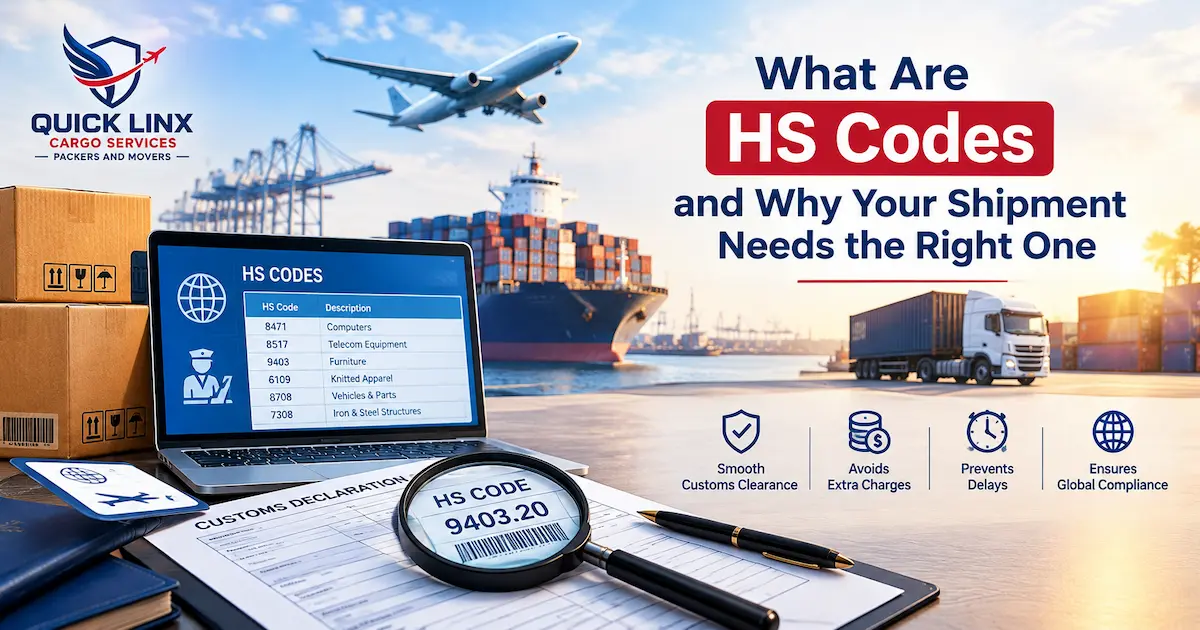
HS stands for Harmonized System. It is a global product naming system run by the World Customs Organization. Every item that moves across a border, from cotton shirts to mobile phones to rice, has a number in this system. Customs officers in Pakistan, the UK, the USA, the UAE and most other countries read the same system. That is why it is called “harmonized.” One product, one code family, understood everywhere. Customs uses the code to decide how much duty you pay, which rules apply, and whether your goods need a permit.
How the Six Digits Break Down
The international HS code has six digits, and each pair has a job. The first two digits show the chapter, which is the broad product group. The next two show the heading, which narrows it down. The last two show the subheading, the specific product. For example, chapter 61 covers knitted clothing, heading 6109 covers T-shirts, and subheading 6109.10 covers cotton T-shirts. The more exact your description, the more exact your code. These first six digits are the same in almost every country.
Why Pakistan Uses Eight Digits
Pakistan follows the six-digit HS system but adds two more digits for its own tariff. This longer number is part of the Pakistan Customs Tariff. The extra digits help Pakistan Customs apply local duty rates and track trade data in more detail. Other countries do the same, and some use ten digits or more. So when you ship from Pakistan, your code may be eight digits, while the receiving country may ask for a longer one. The first six digits stay the same, which makes them a solid base for your paperwork.
Why the Right HS Code Matters for Your Shipment
Customs does not look at your cargo the way you do. It reads your documents first, and the HS code is one of the most important lines on them. If the code matches your goods and your description, clearance is usually smooth. If it does not match, an officer may stop the shipment to ask questions or inspect it. That costs time and money, and it can strain your relationship with a buyer. Getting the code right is a small step that prevents big problems later.
Customs Duty and Taxes
Duty and tax are worked out from the HS code. Each code carries its own rate, and two products that look similar can sit under very different codes. Choose a code with a lower rate than your goods deserve, and customs may correct it and charge the difference, sometimes with a penalty. Choose a higher one by mistake, and you pay more than you need to. Either way, the money comes out of your pocket. A correct code means your landed cost is clear before the cargo arrives.
Clearance Speed and Delays
A clean, matching HS code helps customs process your shipment faster. A vague or incorrect one is a common reason for questions, requests for extra documents, and physical checks. While your cargo waits, storage charges can build up at the destination, and your receiver is left waiting. For time-sensitive goods like samples, spare parts or seasonal stock, even a few days hurts. Getting the code right at the start is the easiest way to keep your delivery date on track.
Restrictions and Permits
Many rules are tied to HS codes. Some goods need a permit, a licence or a special certificate. Others are limited or banned in certain countries. Customs systems often flag these goods by code. If you use a wrong code to avoid a rule, you risk having the shipment seized. If you use the right code, you know in advance what papers you need and can arrange them before shipping. This is especially important for food items, medicines, electronics, batteries and anything that contains liquids or chemicals.
| Problem | What can happen |
| Code is too low-rate for the goods | Customs corrects it and may charge extra duty or a fine |
| Code is too high-rate for the goods | You overpay duty and tax |
| Code does not match the description | Shipment is held for questions or inspection |
| Code hides a restricted product | Goods can be seized or returned |
| Code is missing | Clearance cannot move forward |
Where HS Codes Appear on Your Shipping Documents
You will see the HS code on several papers that travel with your cargo. The commercial invoice and packing list usually carry it next to each item. Customs declarations at both ends use it to assess duty. The airway bill or bill of lading may refer to the goods in general terms, but the detailed codes sit on the supporting papers. The code on every document should be the same. If your invoice says one thing and your declaration says another, customs will notice. Before you ship, check that these items agree:
- Product description on the invoice and packing list
- HS code for each product line
- Quantity, weight and value
- Country of origin
If you are new to the process, our guide on how to send air cargo from Islamabad walks through the full set of documents step by step.
How to Find the Right HS Code for Your Goods
Finding the correct code takes a little care, but it is not hard if you follow a clear order. Start with your product, move to the official tariff, and ask for help if the match is unclear. Do not pick a code only because another shipper used it for something similar. Small differences in material, use or form can change the code completely. Here is a simple way to work through it:
- Write down exactly what the item is, what it is made of, and what it is used for
- Search the Pakistan Customs Tariff for the chapter and heading that fits
- Compare the full description of each option, not only the title
- Confirm the final code with a customs professional if you are unsure
Describe the Product Clearly
Good classification starts with a good description. Note the material, such as cotton, leather, steel or plastic. Note whether it is finished or a part, whether it is new or used, and what it does. A “cotton knitted men’s T-shirt” is easy to classify. A “garment” is not. The same goes for electronics: a phone, a charger and a phone case each have their own code. Keep the description on your invoice consistent with the one you use to find the code.
Check the Pakistan Customs Tariff
The Pakistan Customs Tariff is the main reference for HS codes used in Pakistan. It lists every chapter and heading along with its code and the rules that apply. Pakistan Customs publishes the tariff, and it is updated from time to time, so use the current version rather than an old copy. Read the heading text and any notes under the chapter. These notes often explain what is included or left out. If your goods could fit two headings, the notes usually tell you which one wins.
Ask a Professional When Unsure
Some products are hard to place. Mixed-material items, sets, machine parts and new gadgets are common examples. In these cases, ask a licensed customs agent or your cargo company before you ship. A short check now costs far less than a held shipment later. Also confirm what the destination country expects, because the receiver may need to declare a longer code on their side. When the receiver or buyer knows the correct code for their market, ask them to share it with you.
Common HS Code Mistakes to Avoid
Most HS code problems come from rushing or guessing. The good news is that they are easy to avoid once you know what to look for. Shippers who ship often, and first-time senders alike, run into the same issues:
- Using the code from an old shipment for a new product without checking
- Writing a broad description like “gift items” or “household goods” with no detail
- Picking a code based on the lowest duty rate instead of the real product
- Using different codes on the invoice and the customs declaration
- Forgetting that parts, sets and accessories may need separate codes
- Leaving the code blank and hoping customs will fill it in
Each of these can slow clearance. Our post on mistakes to avoid when booking air cargo covers more errors that cause delays, and it is worth a read before your next booking.
HS Codes for Personal Effects and Household Goods
Many people think HS codes only matter for business shipments. In reality, customs may ask for item details on personal cargo as well. If you are moving abroad and sending clothes, kitchen items, books or electronics, a clear item list helps customs understand what is inside each box. Vague labels like “personal stuff” invite questions. Some items, such as electronics, food, medicine and branded goods, may draw closer attention. Listing contents clearly and keeping the same description on every document makes the process smoother for you and for the receiver.
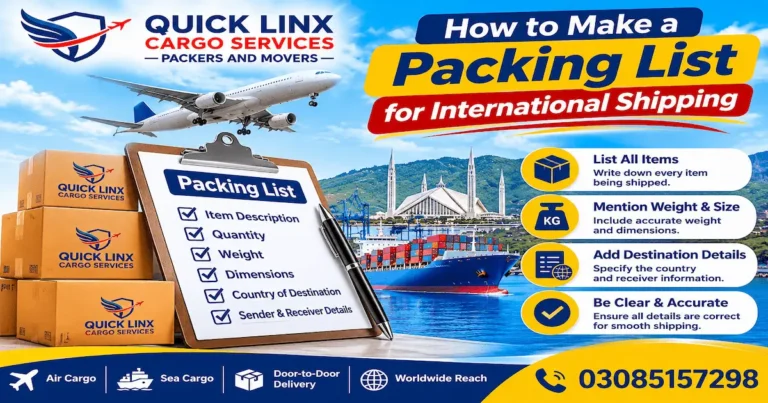
Why a Detailed Packing List Helps
A packing list that names each item, with quantity and approximate value, supports the codes on your declaration. It also helps if customs opens a box. When the list and the contents match, the check is usually short. When they do not, it takes longer. Number each box and note what is inside. This small habit saves real time, especially on sea shipments where the cargo moves through several handling points. If you are weighing speed against cost, our comparison of air cargo vs sea cargo from Islamabad can help you decide.
How Air Cargo QLC Helps With Your Shipment Documents
At Air Cargo QLC, we handle shipments from Islamabad and Rawalpindi to Dubai/UAE, the UK, the USA, Saudi Arabia, Qatar, Italy/Europe and Australia. Our team can guide you on the paperwork your cargo needs, including invoices, packing lists and customs documents, so your goods reach the right desk with the right details. Whether you choose air cargo for speed or door-to-door cargo for convenience, we help you prepare before the shipment moves. Final classification stays with the shipper or the receiver, so please confirm your code before booking.
To see what your shipment may cost, visit our pricing page. When you are ready to send, contact our team on 03085157298 or email Info@aircargoqlc.com.