
If you want to pack items for sea cargo the right way, start with one fact: your boxes will travel for weeks, change hands several times and sit in humid warehouses and containers. Clothes and household items need more protection than most people expect. This guide shows how to pack, seal and label your cartons so they reach the other end in good condition. It is written for families and individuals shipping from Islamabad, Rawalpindi and nearby cities with Air Cargo QLC.
Why Sea Cargo Needs Stronger Packing Than Air Cargo
Sea cargo is the budget-friendly choice for heavy and bulky shipments, but it is also the slowest. Depending on the destination, transit takes roughly 15 to 50 days, and that is before pickup and clearance. Your cartons spend that time stacked, loaded, unloaded and exposed to moisture. Air parcels move faster and are handled less. If you are still deciding between the two, read our air cargo vs sea cargo comparison, then pack with the longer journey in mind. Timelines are approximate, so please confirm with our team.
What Your Boxes Face on the Way
Most sea shipments put cartons through the same few risks:
- Stacking weight, where bottom boxes carry everything above them
- Humidity and moisture inside containers and warehouses
- Vibration and shifting during loading and sailing
- Rough handling at loading and unloading points
A carton that looks fine on your doorstep may not survive all four. Strong boxes, tight packing and moisture protection solve most of these problems.
Why Weak Packing Costs More Later
Poor packing does not only risk broken items. Crushed cartons can spill contents, damp clothes can smell or stain, and a customs inspection may force your boxes to be opened and repacked. In a shared container, a leaking or collapsing box can also damage other people’s cargo. Spending a little more on good cartons and tape is far cheaper than replacing damaged belongings after weeks of waiting.
What to Prepare Before You Start Packing
Good packing begins before the first item goes into a box. Gather your materials, sort everything by type and decide what is really worth shipping. Sea cargo charges depend on weight and space, so sending items you can easily replace may not make sense. A short plan saves time, prevents half-filled boxes and keeps similar items together, which makes unpacking easier at the destination.
Packing Materials Checklist
Collect these before you begin:
- New, double-wall cartons in a few sizes
- Strong packing tape and a tape gun
- Bubble wrap and plain packing paper
- Plastic bags or vacuum bags for clothes
- Stretch wrap for furniture and loose parts
- Silica gel packets for moisture control
- Permanent markers and labels
Avoid old fruit boxes and soft, reused cartons. They lose strength quickly under stacking weight.
How to Sort and List Your Items
Sort items by type and room: clothes, kitchen, bedding, electronics, books. Then write a simple list of what goes in each carton, with a rough value for each item. Most shipments need a packing list, and your team can confirm what your destination requires. A written inventory also helps if you ever need to make an insurance claim or find one box among many.
How to Pack Clothes for Sea Cargo
Clothes look easy to pack, but they cause some of the most common problems in sea shipments. They are light, so people overfill boxes, and they absorb moisture and odours. The goal is simple: start with clean, fully dry clothes, keep them sealed against damp air and fill each carton so nothing can shift or crush.
Fold, Bag and Seal Everyday Clothes
Wash and fully dry everything first. Fold clothes flat, group them by person or season and place each group in a plastic or vacuum bag. Press out the air and seal the bag. Lay the bags flat in the carton, add a silica gel packet and fill any gaps with soft items such as towels. The lid should close flat without bulging. A bulging carton will collapse when stacked.
Bridal Wear, Suits and Delicate Fabrics
Heavily embroidered or beaded outfits need extra care. Wrap each piece in clean tissue paper or a plain cotton sheet before it goes into a garment bag or a large, sturdy box. Keep the decorated side protected and avoid folding sharp creases through beadwork. Do not squeeze delicate pieces into small cartons. Give them their own box, add padding and label it clearly as fragile clothing.
How to Pack Household Items for Sea Cargo
Household goods are heavier and more fragile than clothes, so the rules get stricter. Put heavy items at the bottom of the carton and light ones on top. Never leave empty space, because items that can move will break. Do not mix fragile pieces with heavy objects in the same box. Use smaller cartons for dense items such as books and kitchenware, so no single box becomes too heavy to lift.
Kitchen Items, Crockery and Glass
Wrap each plate, cup and glass separately in packing paper, then add bubble wrap around stacks. Stand plates on their edges instead of laying them flat. Fill every gap with crumpled paper so nothing rattles. Place a layer of padding at the bottom and top of the box. Tape the box shut, shake it gently and listen. If anything moves or clinks, open it and add more filling.
Electronics and Small Appliances
Use the original box and foam if you still have them. If not, wrap the item in bubble wrap and use a snug carton with padding on all sides. Coil cables and tape them to the device or place them in a labelled bag. Remove batteries and ask our team about any restrictions before packing them. Add silica gel inside the carton, since moisture is a real risk for electronics on long sea journeys.
Bedding, Curtains and Soft Furnishings
Quilts, blankets and curtains take up a lot of space but weigh little. Compress them in vacuum bags or press them tightly into plastic bags and seal them. These soft items also work well as padding around fragile goods, so use them to fill gaps in other cartons. If you are moving a whole home, our personal effects and household goods cargo service is built for this kind of shipment.
Furniture and Large Items
Take furniture apart where you can and keep screws in a labelled bag taped to the main piece. Wrap corners and edges with padding, then cover the piece with stretch wrap. Glass tops, mirrors and valuable pieces are better protected in a wooden crate. Never stack fragile furniture inside boxes without padding. Photograph each piece before packing so you have a record of its condition.
Packing Guide by Item Type
Different items need different protection. This quick table shows the best method for the most common household and clothing items, and the mistake to avoid for each.
| Item | Best Packing Method | Avoid |
| Everyday clothes | Dry, folded, sealed in plastic or vacuum bags | Packing damp clothes |
| Bridal wear and suits | Tissue or cotton wrap, own sturdy box | Folding hard through beadwork |
| Plates and glassware | Wrapped one by one, stood on edge | Stacking flat without padding |
| Electronics | Original box or snug padded carton, silica gel | Loose cables and batteries inside |
| Bedding and curtains | Compressed in sealed bags | Leaving them open to damp air |
| Books and papers | Small cartons, filled to the top | Large boxes that become too heavy |
| Furniture | Disassembled, edges padded, stretch wrapped | Wrapping with no corner protection |
How to Label, Seal and Weigh Your Cartons
Packing is only half the job. A well-packed box that is poorly sealed or unlabelled can still be delayed or mishandled. Good labels help the team track which carton belongs to you, and strong sealing keeps the contents safe through stacking and handling. Take a few extra minutes at the end of each box to finish it properly.
Labelling Cartons and Making a Packing List
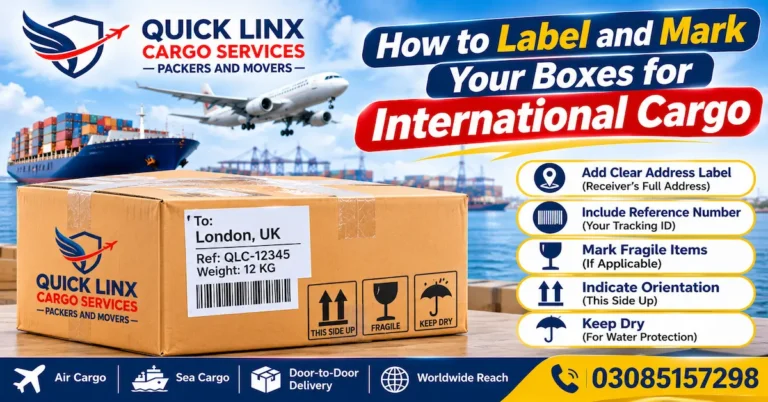
Mark each carton clearly on at least two sides. Include:
- Your name and the destination
- Carton number, such as “3 of 12”
- A short contents note, such as “kitchen items”
- Handling marks like “Fragile” or “This way up”
Match these numbers to your packing list. If one box goes missing or gets opened, you can identify it quickly.
Sealing Cartons and Keeping Weight Safe
Tape the bottom and the top seam in an H pattern, then add a second layer along the edges. Keep every carton to a weight that one person can lift safely. Overweight boxes tear at the handles, split at the base and are more likely to be dropped. If a box feels too heavy, split the contents into two smaller cartons.
LCL or FCL: How the Shipping Type Changes Your Packing
Your packing approach also depends on how your cargo travels. In a shared container, your cartons sit beside other people’s goods. In a full container, the space is yours alone. Both need strong packing, but the focus is slightly different.
Packing for LCL Shipments
With LCL sea cargo services, your goods share a container with other shippers. Use strong, stackable cartons of similar sizes, seal them well and label every side. A weak box can be crushed by cargo above it or leak onto neighbouring goods. Uniform, well-sealed cartons are handled more easily and protect both your items and everyone else’s.
Packing for FCL Shipments
With FCL sea cargo services, you have the whole container. That gives you more control, but loading still matters. Place heavy items at the bottom, fill gaps so nothing shifts and keep weight balanced. Furniture and large items should be wrapped and braced. A tightly loaded container moves far less during the journey than a half-empty one.
Packing Mistakes That Cause Damage in Sea Shipments
Most sea cargo damage comes from a short list of avoidable errors. Check your cartons against these before handover:
- Using old or soft boxes that cannot take stacking weight
- Overfilling cartons so the lid bulges
- Leaving empty space inside, so items shift
- Packing clothes that are still slightly damp
- Putting liquids such as oils or detergents next to clothes
- Using weak tape on heavy boxes
- Skipping labels or a packing list
- Placing heavy items on top of fragile ones
Fixing these takes little time and removes the most common causes of loss.
Pack Yourself or Use Professional Packing Help?
You can pack clothes and simple household items yourself if you have the right materials and time. Fragile, valuable or bulky items are different. A mistake costs more, and sea cargo gives you little chance to fix problems once the shipment has left.
When Packing It Yourself Works
Self-packing suits a few cartons of clothes, books, bedding and non-fragile items. Use new cartons, follow the steps above and double-check weight and sealing. Take photos of your packed boxes and keep your list. For small, simple shipments, this approach can work well and keeps costs down.
When Professional Packing Is Worth It
If you are shipping fragile goods, furniture or a full home, professional help is a safer choice. Our packing and moving services cover packing, and we can also arrange wooden crating, cargo insurance and warehouse storage if your shipment needs them. Insurance is worth asking about for valuable items, since sea journeys are long and handling points are many.
How Packing Affects Your Sea Cargo Cost
Sea cargo charges depend on the weight and the space your cartons take up. Oversized boxes, loose packing and unnecessary padding can all raise your bill, while tight, right-sized cartons help keep it reasonable. Pack firmly, but do not add bulk that serves no purpose. You can see approximate rates for each destination on our pricing page. Rates are approximate, so the final price is confirmed by our team after we know your shipment details.
Get Your Sea Cargo Packed and Picked Up
Whether you need advice on a few cartons or help with a full household shipment, our team can guide you from packing to dispatch. Tell us what you are sending, where it is going and when you need it there. We will suggest the right packing method and shipping option. To get started, contact our team, call 03085157298 or email Info@aircargoqlc.com.