
A packing list is a simple sheet that shows what is inside each box you are sending abroad. It helps the cargo team, the airline or shipping line, and customs officers check your goods quickly. If you are shipping with Air Cargo QLC or any other company, a clear list saves time and avoids questions at the border. This guide shows you what to write, how to set it out, and which mistakes to avoid.
What Is a Packing List and Why Does It Matter for Overseas Cargo?
A packing list describes your shipment box by box. It names every item, shows how many pieces are inside, and gives the weight and size of each carton. It does not set a price or work as a bill. Its job is to match what you say you are sending with what is physically in the boxes. Cargo handlers use it to count cartons at pickup, at the airport or port, and on arrival. Customs officers may use it to check a box without guessing what is inside. Without it, any question about a carton can slow the whole shipment down.
What a Packing List Does for You
A good list protects you in three ways. First, it proves what you packed if a box is delayed or damaged. Second, it helps your receiver check each carton when it arrives. Third, it makes insurance or damage claims easier, because you have a record of every item. Keep one copy with you, send one with the cargo, and email one to the receiver.
Packing List vs Commercial Invoice
These two papers look alike but do different jobs. The packing list describes the boxes. The invoice describes the value and the sale. Item names and quantities should match on both.
| Point | Packing List | Commercial Invoice |
| Main purpose | Shows what is in each box | Shows the value and terms of the goods |
| Shows prices | Not required | Yes |
| Shows weight and size | Yes, for each carton | Usually not |
| Mainly used for | Counting, handling and inspection | Customs value and duty |
What Information Should Go on a Packing List?
Keep the list clear and complete, but do not add detail that does not help. Every line should answer a simple question: who is sending, who is receiving, what is inside, and how heavy is it? Use plain English item names, because the person reading your list may not know local or brand names. Write “cotton shirts” instead of a design name. Type the list if you can. If you write it by hand, use clear block letters. The sections below cover what to include.
Sender and Receiver Details
Start the page with the basic contact details. Use the receiver’s name exactly as it appears on their ID or company papers.
- Full name and address of the sender
- Full name, address and phone number of the receiver
- Date the boxes were packed
- Booking or reference number, if you have one
Item Details
Each item needs its own line. Describe it in simple words, so anyone can understand it at a glance.
- Item name in plain English
- Quantity, such as pieces, pairs or sets
- Material or type, such as cotton, leather or steel
- Brand or model for electronics
- Whether the item is new or used
Box Details
Add the details of each carton next to its items. Cargo is often charged by weight or size, so these numbers matter.
- Carton number, such as 1 of 4
- Gross weight of each carton in kg
- Length, width and height in cm
- Type of packing, such as carton, bag or wooden crate
How to Make a Packing List Step by Step
You do not need special software. A simple Excel or Google Sheets file is enough, and plain paper works too. The key is to prepare the list while you pack, not afterwards. If you write it from memory after sealing the boxes, mistakes are almost certain. Work in the order below and your list will match your boxes. If you are new to sending parcels abroad, our guide on how to send air cargo from Islamabad also explains the booking process from start to finish.
Sort and Group Your Items
Lay everything out and group similar items together. Put clothes with clothes and kitchen items with kitchen items. Mixed boxes are fine, but each item still needs its own line. Avoid vague lines such as “household goods” or “misc items”. They invite questions and may lead to a box being opened.
Number Every Box
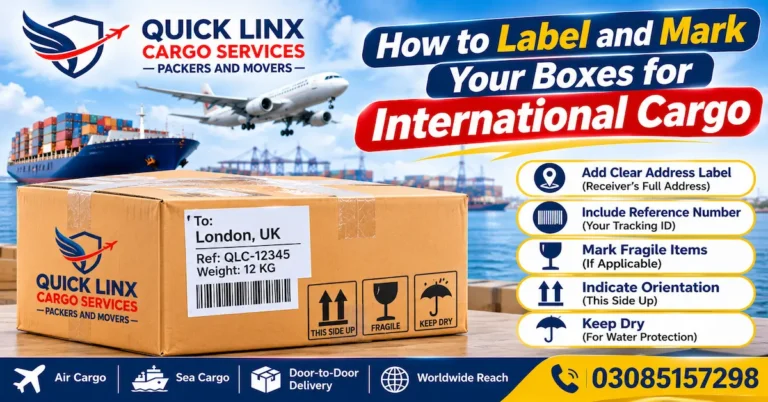
Write a number on each carton with a marker, using a format like 1/4, 2/4, 3/4 and 4/4. This tells everyone how many boxes belong to the shipment. Put the number on at least two sides of the box. Then use the same numbers on your list.
List Items as You Pack
Each time you put an item in a box, add it to that box’s section of the list. Include the quantity. If you pack twelve shirts, write twelve, not “some shirts”. Take a photo of the open box before you close it. The photo is a quick backup if you need to check something later.
Weigh and Measure Each Box
Once a box is sealed, weigh it on a scale and measure its length, width and height. Write these numbers on the list. Weigh the box as it will travel, with tape and filler included. The cargo company may take its own final weight at pickup or at the warehouse, and it can differ slightly from yours. Write your real figures and do not round them down.
Check, Sign and Keep Copies
Add up the total number of boxes and the total weight. Compare item names and quantities with your invoice, if you have one. Sign and date the list. Print at least two copies and save a digital copy on your phone.
A Packing List Format You Can Copy
You can use the layout below for most personal and small business shipments. Change the columns if your goods need extra details, such as size for garments or model number for electronics. Put the sender, receiver and date at the top of the page, then list each box in order. The table shows sample items only. Replace them with your own details.
| Box No. | Item Description | Qty | Net Weight | Box Size (cm) | Gross Weight |
| 1/3 | Cotton shirts, new | 12 pcs | 4 kg | 50 x 40 x 30 | 5 kg |
| 2/3 | Steel kitchen utensils | 20 pcs | 8 kg | 45 x 35 x 30 | 9.5 kg |
| 3/3 | Children’s books | 25 pcs | 10 kg | 40 x 30 x 30 | 11 kg |
| Total | 3 boxes | 57 pcs | 22 kg | 25.5 kg |
Optional Columns That Help
Some shipments need a little more detail. Add these columns only when they apply to your goods, or when your cargo team asks for them.
- Country of origin of the item
- HS code, if your exporter or customs agent gives you one
- Declared value, if requested
- Remarks, such as “fragile” or “keep upright”
Packing List Tips for Air Cargo and Sea Cargo
The basics stay the same for every mode, but air and sea shipments put different pressure on your list. Air cargo is faster and usually lighter, so weight and box size are checked closely. Sea cargo takes longer, and boxes are handled more often, so a clear list helps when cartons travel with other shipments. Ask your cargo team which documents your destination country wants before you finalise the list.
Tips for Air Cargo
If you plan to use air cargo services, measure every box carefully. Air freight can be charged on size as well as weight, so a large, light box may cost more than you expect. Keep the list short and clear, and make sure it matches the weight on each carton.
Tips for Sea Cargo
With LCL sea cargo, your boxes share a container with other people’s goods. Clear numbering on every carton is very important, so your boxes are easy to find at the port. Use strong pens or printed labels, because boxes get rubbed and damp on long journeys. Save a copy of the list on your phone too.
Common Packing List Mistakes to Avoid
Most packing list problems come from rushing. People write the list late, round their numbers, or copy details from an old shipment. A few minutes of care before booking can prevent a delay later. Check your list against the points below before you hand over the cargo. If a box is opened for inspection, a correct list keeps the check short and simple.
Errors That Cause Questions
These are the mistakes we see most often in cargo paperwork:
- Vague descriptions such as “gifts” or “items”
- Weights that do not match the scale
- Quantities that differ from the invoice
- Missing carton numbers
- Items inside the box that are not on the list
What Happens When the List Is Wrong
If the list and the box do not match, an officer may open the carton and check every item. This can add days to clearance and may lead to extra handling or storage charges. In serious cases, goods can be held until the papers are corrected. A correct list costs nothing to prepare, while a wrong one can cost you time and money.
Need Help Packing and Preparing Your Shipment?
If you are not sure how to pack or list your items, our team can guide you. We offer packers and movers services in Islamabad and Rawalpindi, so your goods can be packed properly before they travel. You can also check approximate per-kg costs on our pricing page before choosing between air and sea. Send us your draft list and our team can tell you if anything looks unclear. Call 03085157298 or contact our team with details of what you are sending, where it is going and the estimated weight.