
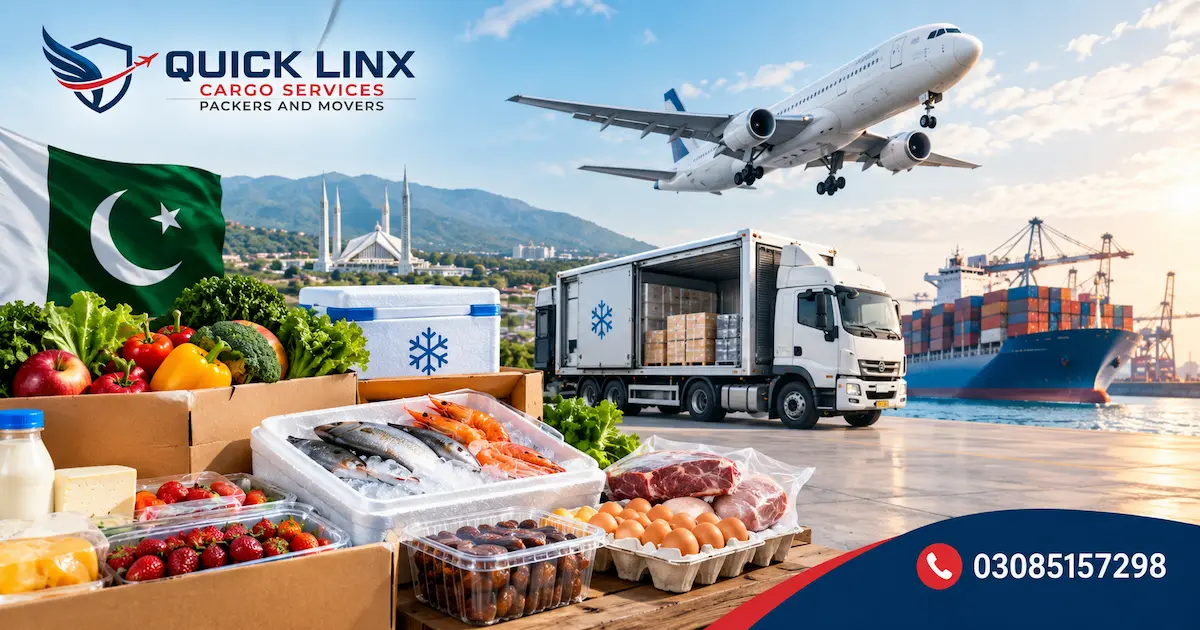
Sending food abroad is not like sending clothes or documents. Food can spoil, leak, or get stopped at the border if the paperwork or packing is wrong. Many families in Pakistan send dry fruits, spices, sweets, and homemade items to relatives in the UK, USA, Dubai, Saudi Arabia, and Qatar. This guide explains what you can send, what to avoid, how to pack it, and which shipping method fits your food. It is based on how food shipments move out of Islamabad and Rawalpindi.
Which Food Items Can You Ship Abroad from Pakistan?
Not every food item travels well. The safest choices are dry, sealed, and shelf-stable. These items hold up through long transit times and different climates. Fresh and chilled food is much harder, because time and temperature decide whether it arrives in good condition. Each country also sets its own rules on what food it accepts. So the first step is to decide which group your item falls into, then check the rules for your destination before you pack anything.
Shelf-stable food that ships well
Dry and sealed food is the easiest to send. It does not need a cold chain and is less likely to be rejected. Common examples include:
- Dry fruits and nuts, such as almonds, walnuts, and dates
- Whole and ground spices, tea, and lentils
- Rice and flour in sealed packs
- Packaged sweets, biscuits, and snacks
- Oil-based pickles in tightly sealed jars
Fresh and perishable food needs extra care
Perishables include fresh fruit, vegetables, cooked meals, dairy, and meat. These spoil fast and face the strictest border checks. Fruit such as mangoes is usually sent by air because speed matters. Cooked and homemade food is the riskiest category. Before you book, talk to our team so we can tell you whether your item, route, and timing make sense. If the answer is no, we will say so rather than let you waste money.
Food Items That Are Restricted or Hard to Ship
Some food items are banned or heavily restricted in many countries. Meat, dairy, eggs, and fresh produce are the usual problem categories, because they can carry animal and plant diseases. Australia, the UK, the EU countries, and the USA all check food closely. Gulf countries also look at labels and certificates. A shipment that fails inspection can be held, returned, or destroyed, and you may still pay the freight charges. Checking the rules first saves money and stress.
Items that usually cause problems
These items are the most likely to be stopped or delayed:
- Fresh meat, chicken, and dairy products
- Homemade food with no ingredient label
- Fresh fruit and vegetables sent to strict biosecurity countries
- Liquids and sauces in weak or unsealed containers
- Food that is close to its expiry date
Why labels and ingredients matter
Customs officers want to know what is inside the box. Packed food with no label, no ingredient list, or an unclear expiry date is far more likely to be held. Write the contents clearly on the box and keep original packaging where you can. If you are sending homemade items, list every ingredient, because some countries restrict specific ones.
Documents and Rules to Check Before You Ship Food
Food shipments often need more paperwork than general cargo. The exact list depends on the food, the quantity, and the destination country. A small personal parcel is treated differently from a commercial consignment. Shipments are often held back because of missing certificates or label problems, not because of the food itself. Gather your papers before pickup, so your cargo does not sit waiting at the airport or port.
Documents you may need
Ask for the full list for your route, but these are the usual starting points:
- A copy of your CNIC or passport
- A packing list showing each item and its weight
- Commercial invoice, if the food is being sold
- Health or phytosanitary certificate, if the destination asks for one
- Halal certificate, where the buyer or country requires it
Destination rules change often
Food import rules are different in every country and can change. A product allowed in Dubai may be refused in Australia. Always confirm the current rules for your destination, either with the receiver, the destination customs authority, or our team, before you ship. Do not rely on an old answer from a friend.
How to Pack Food and Perishables for International Shipping
Good packing protects the food and keeps the rest of your cargo clean. Food travels for days or weeks, and boxes get stacked, moved, and sometimes dropped. A weak jar or loose bag can ruin the whole shipment. Use strong boxes, seal every item, and leave no empty space inside. If you want help, we offer packaging as part of our service, so your items are packed for the journey.
Packing steps that work
Follow these steps for dry and shelf-stable food:
- Use food-grade, airtight containers or sealed packets
- Wrap jars and bottles separately and add padding
- Place heavy items at the bottom and light ones on top
- Fill empty gaps with paper or bubble wrap
- Seal the box with strong tape on all joints
Keep food away from other goods
Strong smells travel. Spices, dried fish, and pickles can leave their smell on clothes and other items in the same box. If you are sending food together with personal items, pack the food in a separate sealed bag or a separate carton. This also helps if inspectors need to open and check the food.
Air Cargo or Sea Cargo for Food Shipments?
Speed is the main question for food. Air cargo is faster, which suits anything that can spoil or has a short shelf life. Sea cargo takes weeks, but costs less per kilo, so it suits dry, long-life food in larger quantities. Both options pass through customs checks, so paperwork matters either way. Our guide on air cargo vs sea cargo from Islamabad explains the full difference if you want more detail.
Approximate transit time and rates by destination
The table below shows general cargo rates and delivery times from Pakistan. Food may be priced differently depending on weight, packing, and rules at the destination, so treat these as a guide only.
| Destination | Air Cargo (per KG) | Sea Cargo (per KG) |
| Dubai / UAE | PKR 1,200–1,800 (3–6 days) | PKR 500–700 (15–25 days) |
| Qatar | PKR 1,500–2,000 (4–7 days) | PKR 600–800 (20–30 days) |
| Saudi Arabia | PKR 1,800–2,200 (4–7 days) | PKR 700–900 (20–30 days) |
| UK / Italy / Europe | PKR 2,500–3,500 (5–8 days) | PKR 600–1,200 (30–45 days) |
| USA | PKR 3,000–4,000 (5–10 days) | PKR 1,200–1,800 (35–50 days) |
| Australia | PKR 3,000–4,000 (6–10 days) | PKR 1,400–2,000 (35–50 days) |
Which one should you pick?
Choose air cargo for food with a short shelf life or when family is waiting for it. Choose sea cargo for dry, long-life items in bigger quantities, such as rice, lentils, or tea. For a small parcel with a fixed address abroad, our door-to-door cargo service can collect from you and deliver to the receiver. For sea shipments of smaller loads, see our LCL sea cargo service.
Step-by-Step: How to Ship Food from Pakistan with Air Cargo QLC
The process is simple if you prepare in advance. You do not need to visit a port or airport yourself. Our team checks the items, advises on packing, handles customs paperwork, and books the shipment. If you are new to cargo, our guide on how to send air cargo from Islamabad walks through the general process too.
Five steps from pickup to delivery
- Contact us with your food items, weight, and destination country
- We confirm whether the items are allowed on your route
- Pack the food or let our team pack it for you
- We prepare the documents and arrange customs clearance
- Your cargo is booked by air or sea and delivered to the receiver
Add insurance for valuable shipments
Food parcels can be delayed or damaged in transit. If you are sending a large or valuable consignment, ask us about cargo insurance when you book. It is better to decide this before the shipment leaves than after something goes wrong.
How Much Does It Cost to Ship Food Items from Pakistan?
Cost depends on weight, destination, and shipping method. Air cargo costs more per kilo but gets food there faster. Sea cargo is cheaper but slow. Packing materials, documents, and any destination fees add to the total. Rates also change over time, so always ask for a current quote before you book. Our pricing page gives a general idea, and our team can give you a final figure for your exact shipment.
What affects the final price
These are the main factors behind your quote:
- Total weight of the packed boxes
- Destination country and route
- Air or sea shipping
- Packing and any special handling
- Customs paperwork and insurance, if needed
Common Mistakes When Shipping Food Abroad
Most food shipping problems come from small mistakes that could have been avoided. People send food without checking the rules, pack in a hurry, or leave out paperwork. A little care at the start protects both your money and your food. The mistakes below are the ones we see most often when people send food from Pakistan.
Mistakes to avoid
- Sending banned items such as meat or dairy without checking the rules
- Packing food in weak bags or jars that can leak
- Leaving out labels, ingredient lists, and expiry dates
- Choosing sea cargo for food that spoils quickly
- Mixing strong-smelling food with clothes or other goods
- Booking before confirming what the destination country allows
Ready to Send Food Abroad from Pakistan?
If you are not sure whether your food can be shipped, ask before you pack. We will tell you honestly what is possible on your route and what is not. Air Cargo QLC serves Islamabad and Rawalpindi and ships to Dubai/UAE, UK, USA, Saudi Arabia, Qatar, Italy/Europe, and Australia. You can also read more about us on our homepage, or send your details through our contact page for a quote. You can also call 03085157298.