
Amazon has no local marketplace in Pakistan, so sellers send their stock to Amazon fulfillment centers in countries like the USA, UK, and UAE. This guide shows how to ship to Amazon FBA from Pakistan, from the shipping plan to customs and final delivery. Air Cargo QLC ships from Islamabad and Rawalpindi, and these are the steps we see sellers follow.
What Shipping to Amazon FBA from Pakistan Really Involves
When you sell through Fulfillment by Amazon, Amazon stores your products, packs each order, and delivers it to the buyer. Your part is getting the stock to the right fulfillment center in good condition. That means correct labels, proper cartons, and clean paperwork. Amazon decides which fulfillment center receives your shipment, and you cannot choose a different one.
Shipping from Pakistan adds two things that US-based sellers do not face. Your goods must clear Pakistani export procedures, and they must clear import customs in the destination country. Most sellers handle both through a freight forwarder or cargo company, because one wrong document can hold the whole shipment at the airport or port.
Who This Guide Is For
This guide is for Pakistani sellers who already have, or are about to open, an Amazon seller account. It suits private label sellers shipping their own brand, wholesale sellers moving bulk stock, and handmade or local product businesses selling abroad. Whether you ship 50 kg or several hundred kilograms, the process is the same. Only the freight method and the cost change.
How to Ship Your Inventory to Amazon FBA, Step by Step
The process is easier when you follow it in order. Most delays happen because a seller books the cargo first and fixes labels or documents later. Work through the steps below before your goods leave Pakistan.
- Create the shipping plan
- Prepare and label every unit
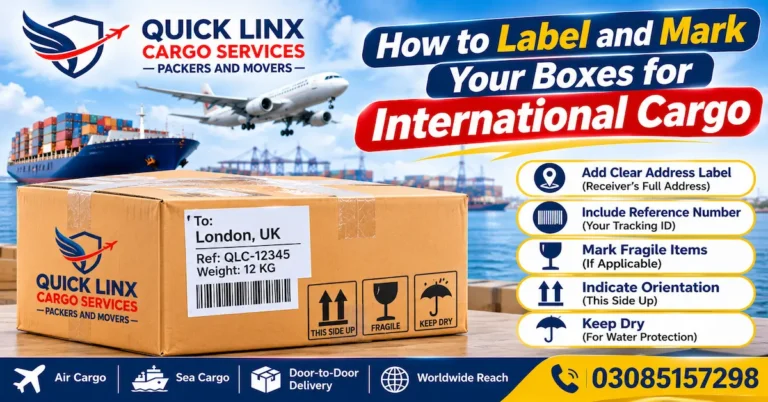
- Pack the cartons to Amazon’s rules
- Book your cargo and arrange customs
- Add shipment details and follow check-in
Each step is explained below. Complete one before you move to the next, and keep a copy of every document you create along the way.
Step 1: Create the Shipping Plan in Seller Central
Start inside your Amazon seller account. Choose the products you want to send and enter how many units you have and how they are packed. Seller Central then gives you the destination fulfillment center and prints your shipment ID. Do this before you book any freight. The destination address decides which country and city your cargo must reach, and it directly affects your freight quote.
Step 2: Prepare and Label Every Unit
Each unit needs a product label that matches your listing, usually an FNSKU barcode. Boxed items may also need a poly bag, bubble wrap, or a suffocation warning. You can do this yourself, ask your supplier, or use a prep service. Amazon can reject units with missing or unreadable labels. Print labels clearly and test-scan a few before you pack.
Step 3: Pack Cartons to Amazon’s Rules
Pack units in strong cartons that can survive long transit. Keep box weight within Amazon’s limit, which is generally around 50 lb (about 23 kg) per carton. Use one product per carton where possible, and avoid mixing items. Each carton needs its own Amazon carton label from your shipment page. Leave no empty space inside, because loose items shift and get damaged on a long journey.
Step 4: Book Your Cargo and Arrange Customs
Once your cartons are ready, book the freight. Share your shipment ID, carton count, weights, and box sizes with your cargo company. Choose air or sea, depending on your deadline and budget. A good forwarder will also guide you on the commercial invoice, packing list, and customs clearance. You can read about our air cargo services if you need speed for fast-selling stock.
Step 5: Add Shipment Details and Follow Check-In
After booking, enter the shipment details in Seller Central as Amazon requires. Keep your cargo reference number handy and stay in touch with your cargo company until delivery. Once the goods reach the fulfillment center, Amazon scans and checks them in. Your stock only becomes available to buyers after check-in is complete, so factor this extra time into your launch plan.
Air Cargo o Sea Cargo for Amazon FBA Inventory?
Both work for FBA. The right choice depends on how fast you need stock on the shelf and how much margin each unit leaves you. Air is faster and costs more per kilogram. Sea is slower and far cheaper, especially for heavy or bulky goods.
Many Pakistani sellers use both. They send a small air shipment first to start selling and collect reviews. Then they replenish with larger sea shipments to keep costs down. If you want a deeper comparison, read our guide on air cargo vs sea cargo from Islamabad.
| Factor | Air Cargo | Sea Cargo |
| Speed | Fastest option | Slowest option |
| Cost per kg | Higher | Much lower |
| Best for | First orders, restocks, light items | Bulk stock, heavy or bulky items |
| Risk of stockout | Lower | Higher without planning |
When Air Cargo Makes Sense
Choose air when your stock is running low, when you are launching a new product, or when your items are small and valuable. Air also suits peak selling periods, when a delay of three weeks can cost you the whole season. The higher freight cost is easier to absorb on products with strong margins.
When Sea Cargo Makes Sense
Choose sea when your products are heavy, bulky, or low in value per kilogram. Furniture, home goods, and large restocks are good examples. For smaller loads, LCL sea cargo lets you share container space and pay only for what you ship. Plan early, because sea transit is long and Amazon check-in comes after arrival.
Shipping Cost and Transit Time to Amazon Destinations
Freight cost depends mainly on weight, volume, and the route. Air cargo is charged by the greater of actual weight or volume weight, so bulky cartons can cost more than their weight suggests. The table below shows approximate per-kg rates and transit times from Pakistan for the markets most FBA sellers use.
| Destination | Air Cargo (per kg) | Air Transit | Sea Cargo (per kg) | Sea Transit |
| USA | PKR 3,000-4,000 | 5-10 days | PKR 1,200-1,800 | 35-50 days |
| UK / Europe | PKR 2,500-3,500 | 5-8 days | PKR 600-1,200 | 30-45 days |
| Dubai / UAE | PKR 1,200-1,800 | 3-6 days | PKR 500-700 | 15-25 days |
| Saudi Arabia | PKR 1,800-2,200 | 4-7 days | PKR 700-900 | 20-30 days |
| Australia | PKR 3,000-4,000 | 6-10 days | PKR 1,400-2,000 | 35-50 days |
These figures are approximate and can change. Transit times cover the journey only and do not include customs clearance or Amazon check-in. Check current rates on our pricing page before you plan your budget.
What Affects Your Final Cost
Several things move the final price beyond the base rate:
- Actual weight and volume weight of your cartons
- Air or sea, and the season you ship in
- Packaging and wooden crating, if your goods need extra protection
- Cargo insurance for valuable stock
- Import duty and taxes in the destination country
Ask for a full quote that shows every charge, so you can calculate your landed cost per unit before you commit.
Documents You Need Before Your Cargo Leaves Pakistan
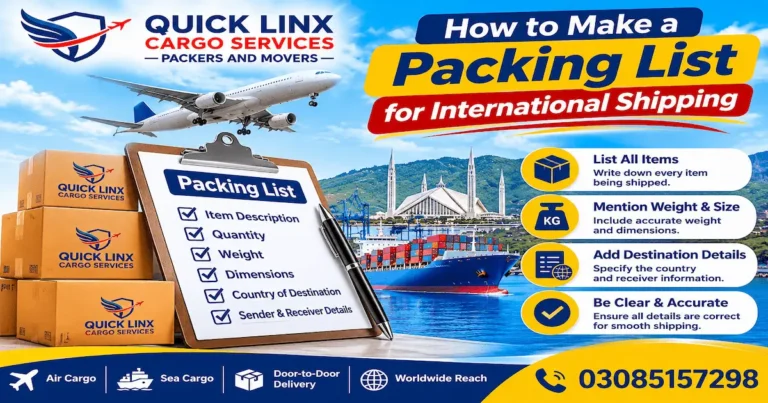
Missing paperwork is one of the most common reasons FBA shipments get stuck. Prepare your documents early, and make sure every detail matches across all of them. The product description, quantity, and value on your commercial invoice should agree with your packing list and Amazon shipment.
- Commercial invoice with product details and value
- Packing list showing cartons, units, and weights
- Amazon shipment ID and carton labels
- Seller account and business details for customs
- Any product-specific permits or certificates
Your cargo company will tell you which items apply to your goods and destination.
Who Pays Duty and Who Clears Customs
In most cases, the seller is treated as the importer, which means import duty and taxes in the destination country are your responsibility. Rules differ between the USA, UK, and EU, and they change over time. Ask your forwarder how customs clearance will be handled at the destination, and confirm the duty rules for your product category before you ship.
Mistakes That Delay or Block FBA Shipments
Most FBA problems come from small errors that were easy to avoid. A little checking before you ship saves weeks of delay and extra cost.
- Booking freight before creating the shipping plan
- Printing blurry or wrong labels
- Mixing different products in one carton
- Overweight or weak cartons
- Mismatched details between invoice and packing list
- Choosing sea freight too late and running out of stock
How to Avoid Them
Make a short checklist and tick off each item before pickup. Weigh and measure every carton, test-scan every label, and compare your invoice with your packing list line by line. If you are new to FBA, start with a small first shipment. It lets you learn the process without risking a large amount of stock.
How Air Cargo QLC Helps Amazon Sellers Ship from Pakistan
We ship from Islamabad and Rawalpindi on routes that include the USA, UK, Dubai/UAE, Saudi Arabia, and Australia. Our services cover air cargo, sea cargo (LCL and FCL), packaging, wooden crating, cargo insurance, customs clearance, and door-to-door delivery. These cover the freight side of your FBA shipment.
Amazon-specific prep, such as FNSKU labeling and prep work, should be confirmed with our team before you book. Tell us your destination fulfillment center and cargo details, and we will explain what we can handle for your shipment.