Before you pack a single box, it’s worth knowing what you’re allowed to ship out of Pakistan and what customs will stop at the airport or port. Getting this wrong can mean delays, fines, or your shipment getting held indefinitely. This guide breaks down what’s completely banned, what needs special permission, and how to avoid problems before you book your cargo.
Why Prohibited Item Rules Exist
Every country controls what leaves and enters its borders, and Pakistan is no different. Customs authorities enforce these rules to stop illegal trade, protect national security, and meet international shipping agreements. Some restrictions are about safety like banning items that could catch fire or explode in transit. Others exist to protect cultural heritage, control currency movement, or follow trade laws set with countries like the UAE, UK, and USA.
For shippers, this means every item needs a quick mental check before it goes into a box. Something that seems harmless, like a decorative antique or a bottle of perfume, can fall into a restricted category depending on its value or ingredients. Knowing the categories in advance saves you from a shipment getting stuck at the airport while paperwork gets sorted out.
Completely Prohibited Items
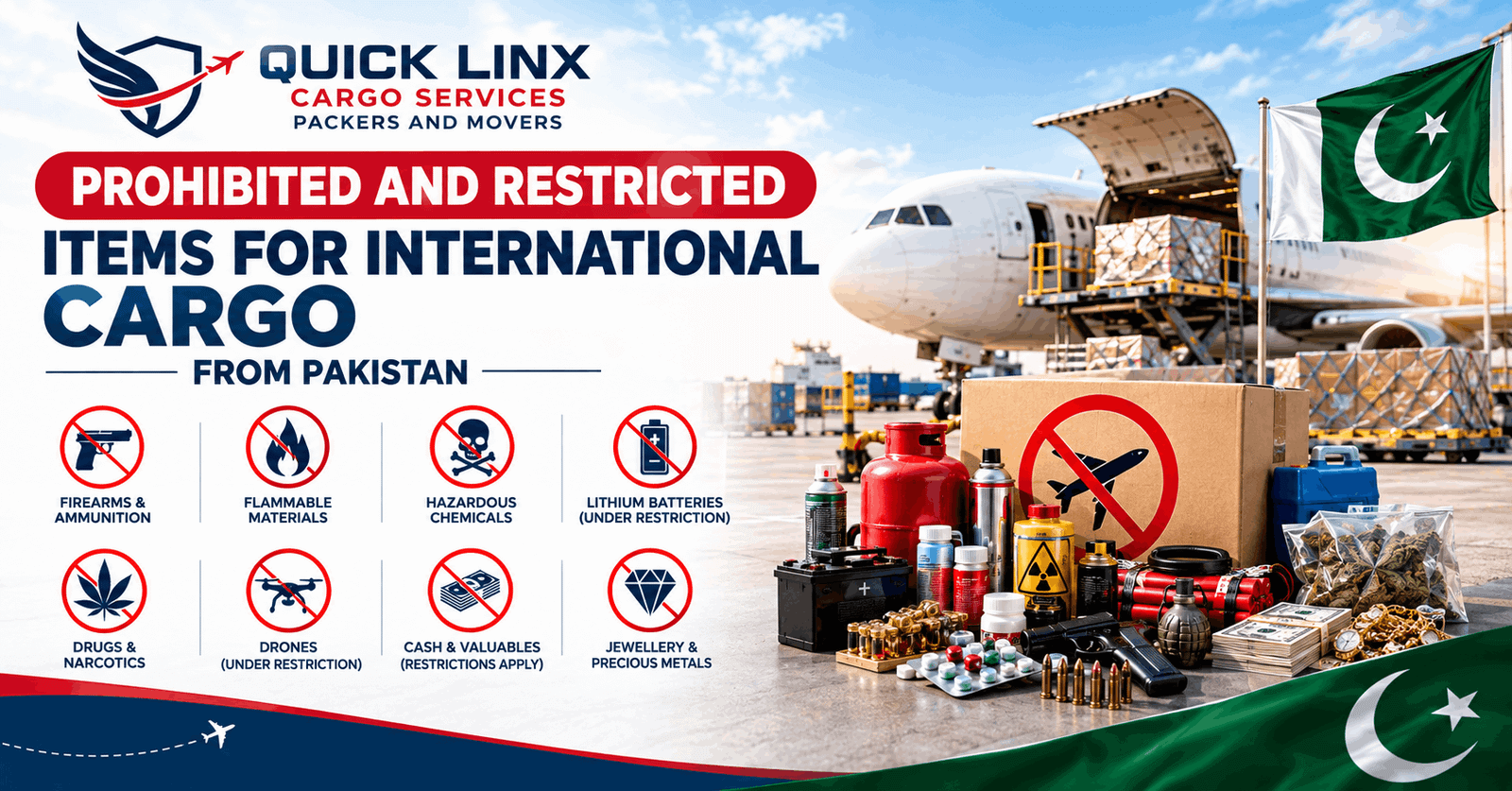
Some items simply cannot be shipped out of Pakistan under any circumstances, regardless of destination. These are flagged and seized by customs if found in a shipment.
- Arms, ammunition, and explosive materials of any kind
- Narcotics and illegal drugs
- Counterfeit currency, fake branded goods, and pirated media
- Antiques and archaeological artifacts without government clearance
- Radioactive material and hazardous chemicals
- Pornographic material and content banned under local law
A Note on Antiques and Cultural Items
Pakistan has strict laws around exporting antiques, coins, and archaeological finds. Even items that seem like ordinary souvenirs old coins, carvings, or manuscripts can require clearance from the Department of Archaeology before they’re allowed to leave the country. If you’re shipping anything that could be considered historical or culturally significant, check with the relevant department first, since customs will hold the shipment without proper documentation.
Restricted Items Needing Special Permission
Restricted items aren’t banned outright, but they need extra paperwork, permits, or declarations before they can be shipped. Skipping this step is one of the most common reasons cargo gets delayed at the export stage.
| Item Category | What’s Usually Required |
| Precious metals (gold, silver) | Declaration and value limits apply |
| Currency above a set limit | State Bank declaration |
| Wildlife products (skins, ivory) | Wildlife department permit |
| Certain food and agricultural items | Health or agriculture certificate |
| Chemicals and pharmaceuticals | Import/export license from relevant authority |
| Firearms replicas or blades | Special clearance, case by case |
If your shipment falls into any of these categories, it’s worth checking with your cargo provider early. Some permits take a few days to process, and starting late is a common cause of missed shipping deadlines.
Personal Effects and Household Goods Restrictions
Shipping personal belongings whether it’s household goods, gifts, or items for relocation comes with its own set of rules. Most personal shipments move smoothly, but a few categories cause repeated issues for first-time shippers.
- Electronics with lithium batteries packed loosely (must follow battery shipping rules)
- Large amounts of new, unused items that look commercial rather than personal
- Alcohol, in any quantity, for most destinations
- Perishable food items without proper packaging or certification
- Jewelry or valuables exceeding declared personal use limits
If you’re shipping personal effects for a house move or relocation abroad, it helps to list out household items clearly with a rough value, especially for door-to-door shipments. Our services page covers how personal effects cargo is handled from pickup to delivery.
Destination-Specific Restrictions to Know
Prohibited and restricted item lists aren’t only about Pakistan’s export rules the destination country also has its own import restrictions, and both sides apply at the same time.
Dubai and Saudi Arabia
Both destinations have strict rules around alcohol, non-halal food products, and certain religious or political material. Saudi Arabia in particular restricts items considered against local customs, so it’s worth checking specifics before shipping personal or commercial goods.
UK and Europe
The UK applies close scrutiny to food products, plant material, and certain electronics due to safety certification requirements. Items without proper labeling or certification can be held at customs even if they’re legal to export from Pakistan.
USA
US customs is particularly strict on food items, agricultural products, and anything containing animal-derived material. Commercial shipments also need accurate HS codes and invoices to avoid delays.
How to Avoid Delays and Rejections
A little preparation goes a long way when it comes to avoiding customs issues. Here’s what generally keeps shipments moving without hold-ups:
- Declare the actual contents and value of your shipment honestly
- Check destination country import rules alongside Pakistan’s export rules
- Get permits in advance for restricted categories like wildlife products or chemicals
- Avoid loose packing of batteries or fragile electronics
- Keep invoices and receipts ready for high-value items
Shippers who prepare documentation ahead of time rarely run into serious delays. Most hold-ups happen when paperwork is incomplete or an item falls into a restricted category without the shipper realizing it.
Shipping Cargo the Right Way with Air Cargo QLC
At Air Cargo QLC, we help shippers avoid these problems before they happen. Whether you’re sending air cargo or sea cargo from Islamabad, our team checks your shipment against current export rules so nothing gets held up at the last minute.
If you’re deciding between air and sea for your shipment, our air cargo vs sea cargo guide explains which option fits different types of cargo. And if your shipment includes valuable or fragile items, it’s worth reading our cargo insurance guide to understand your protection options.
Not sure if your item is restricted or needs a permit? Contact our team before you book, and we’ll help you check.