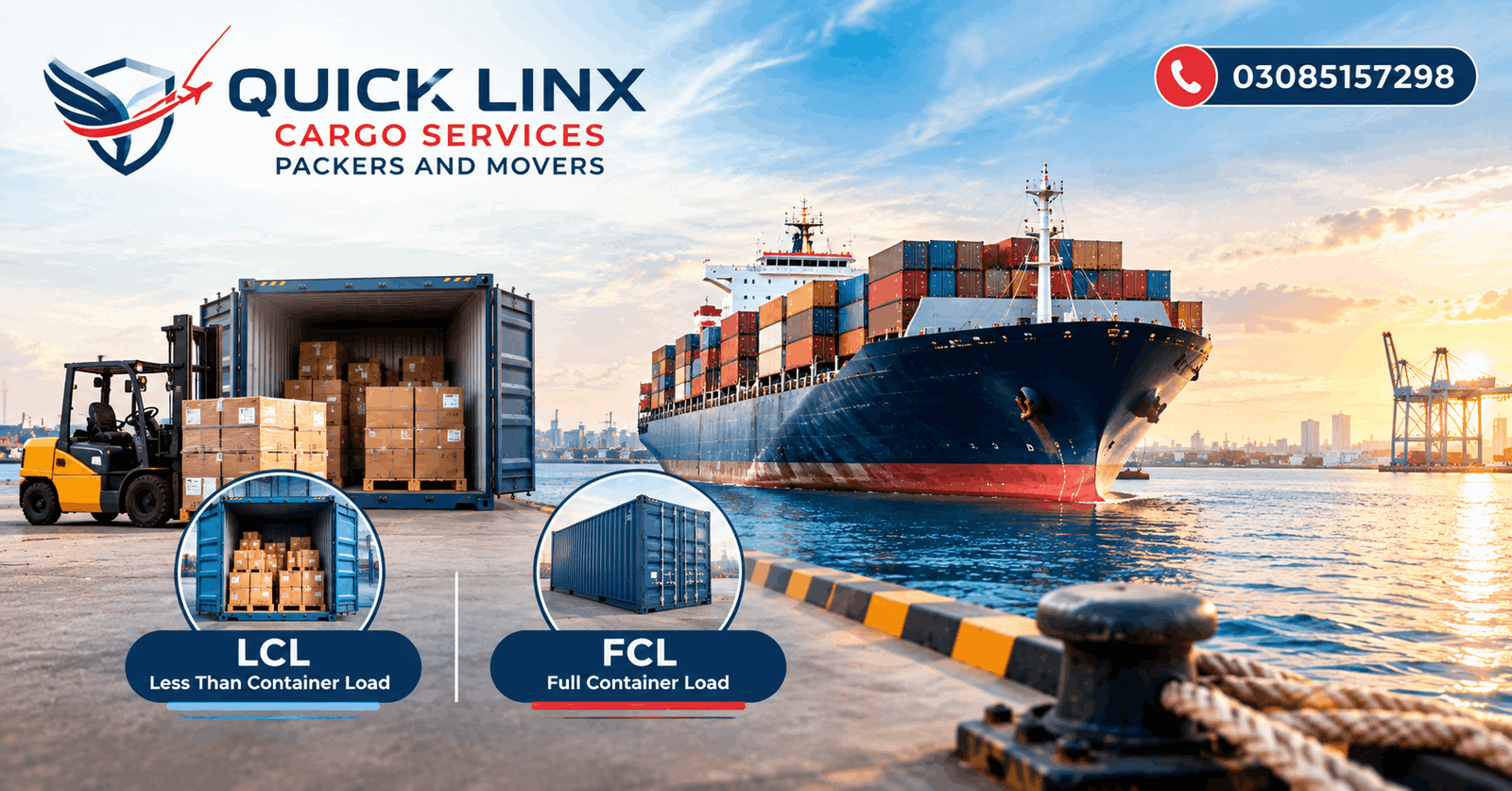
Choosing between LCL and FCL is one of the first decisions you’ll face when shipping cargo by sea. The right choice depends on how much you’re shipping, your budget, and how flexible your delivery timeline is. This guide breaks down the difference between the two, when each one makes sense, and how the costs compare.
What Is LCL (Less than Container Load) Sea Cargo?
LCL means your shipment shares container space with cargo from other shippers. Instead of paying for an entire container, you only pay for the space your goods actually take up, measured in cubic meters (CBM). This makes LCL a practical option for smaller shipments that don’t need a full container.
Because your cargo is grouped with other shipments, LCL usually takes a bit longer at the origin and destination ports, since the container has to be consolidated and then deconsolidated once it arrives. For businesses and individuals shipping smaller volumes, this small delay is usually a fair trade-off for the lower cost.
What Is FCL (Full Container Load) Sea Cargo?
FCL means you book an entire container for your shipment alone, regardless of whether you fill it completely. Nobody else’s cargo shares the space, which means faster loading, less handling, and a lower risk of damage since your goods aren’t being moved around with other shipments at the port.
FCL is generally the better option once your cargo volume gets close to filling a container on its own. Even if you’re not shipping a full load, sometimes booking a full container works out cheaper than paying LCL rates for a large partial shipment.
Key Differences Between LCL and FCL
| Factor | LCL (Less than Container) | FCL (Full Container) |
| Best for | Smaller shipments | Larger shipments |
| Pricing basis | Per CBM/weight | Per container |
| Handling | Shared container, more handling | Dedicated container, less handling |
| Transit time | Slightly longer (consolidation) | Faster, direct |
| Damage risk | Slightly higher | Lower |
| Flexibility | Good for irregular volumes | Better for regular, bulk shipments |
When to Choose LCL Sea Cargo
LCL makes sense in a number of common situations:
- You’re shipping a small volume that won’t fill a container
- You want to avoid paying for unused container space
- Your shipment isn’t time-critical
- You’re testing a new supplier or market with a smaller order
- You’re shipping personal household items rather than commercial bulk
When to Choose FCL Sea Cargo
FCL is usually the better fit when:
- Your cargo volume is close to or exceeds a full container
- You need faster port handling and fewer transit stops
- You’re shipping regularly and want predictable scheduling
- Your goods are high-value or sensitive to extra handling
- You want to avoid sharing space with other shippers’ cargo
Cost Comparison: LCL vs FCL
LCL costs are based on the volume or weight you’re shipping, so smaller shipments generally cost less overall, even though the per-unit rate can be higher than FCL. FCL costs are based on booking the whole container, so the per-unit cost drops significantly once your shipment volume is large enough to justify it.
Approximate sea cargo rates from Islamabad/Rawalpindi by destination (per KG, LCL basis):
| Destination | Sea Cargo Rate | Estimated Transit Time |
| Dubai / UAE | PKR 500–700 | 15–25 days |
| Qatar | PKR 600–800 | 20–30 days |
| Saudi Arabia | PKR 700–900 | 20–30 days |
| UK / Italy / Europe | PKR 600–1,200 | 30–45 days |
| USA | PKR 1,200–1,800 | 35–50 days |
FCL rates are quoted per container rather than per KG, so they vary depending on container size and destination. Contact our team directly for an FCL container quote based on your shipment.
How Air Cargo QLC Handles LCL and FCL Sea Cargo Shipments
At Air Cargo QLC, we handle both LCL and FCL sea cargo from Islamabad and Rawalpindi to Dubai, UK, USA, Saudi Arabia, and Qatar. Our team helps you decide which option fits your shipment size and budget, so you’re not overpaying for space you don’t need or waiting longer than necessary for a shipment that could move faster with FCL.
If you’re not sure whether your shipment needs a full container or fits within LCL, contact our team and we’ll walk you through the right option. You can also check our air cargo vs sea cargo comparison if you’re still deciding between air and sea freight.