
A buyer abroad likes your catalogue and asks for a sample. This is your chance to turn an enquiry into a real order. A late, damaged, or held-up sample can lose that chance quickly. This guide explains how to send product samples from Pakistan in a clear, simple way: what to prepare, how to pack, which shipping option to choose, and what mistakes to avoid. It is written for exporters, small manufacturers, and online sellers in Islamabad, Rawalpindi, and nearby cities.
Why Samples Matter Before a Bulk Order
Most overseas buyers will not place a large order without seeing the product first. A sample lets them check your quality, finish, size, and packaging with their own eyes. It also shows how you work. If your sample arrives on time, well packed, and with clean paperwork, the buyer feels safer about the bulk order that follows.
That is why sample shipping deserves the same care as a full shipment. The parcel is small, but the impression it makes is big. Treat it as part of your sales process, not as a small favour to the buyer.
What Buyers Usually Expect to Receive
Buyers normally expect a sample that matches what they will receive in bulk. It should carry your product name, code, and size details. Many also like a small price list or catalogue inside the box. Keep a matching copy of every sample you send. If the buyer later raises a quality question about the bulk order, your retained sample is your reference point.
Who Pays for Sample Shipping
There is no fixed rule. Some exporters send the first sample free and ask the buyer to cover courier charges. Others cover everything for a serious buyer. Some adjust the sample cost against the first order. Agree on this in writing before you ship, so there is no argument later.
Documents Needed to Send Product Samples from Pakistan
Samples need less paperwork than a full container, but they still need correct papers. Weak or vague documents are one of the most common reasons a small parcel is held at customs. Under Pakistan’s current process, the courier or clearing agent files the export declaration with Pakistan Customs on your behalf, so your job is to give them accurate details.
Here is what to keep ready:
- Commercial or proforma invoice with a clear description of each item
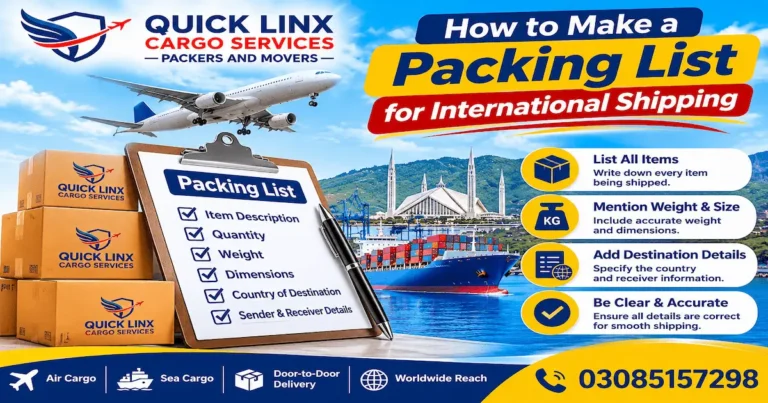
- Packing list showing the number of boxes, weight, and contents
- Your CNIC or NTN details, as the courier asks
- HS code for the product, if you know it
- Buyer’s full name, address, phone number, and email
Invoice and Declared Value
Write a plain product description such as “cotton kurta, men’s, size M” instead of just “garment sample”. State the real value. Under-declaring may look like a way to avoid duty, and it can cause delays or penalties. If the sample is free, say so on the invoice and still show its value for customs purposes.
Certificates for Special Products
Some products need extra approval even when you send only one piece. Food items, cosmetics, medicines, plant material, and some leather or electrical goods can fall under this. Rules also differ from one country to another. Ask your buyer or their importer what the destination country requires before you dispatch.
How to Pack Product Samples So They Arrive Safe
A sample can travel through several hands before it reaches the buyer. Pack it as if it will be dropped once. Use a new, strong carton, fill empty space with paper or bubble wrap, and seal all edges with strong tape. Keep the box size close to the product size, because courier and air cargo charges depend on weight and box volume.
Good packing also protects your name. A neat, clean parcel tells the buyer that your bulk orders will be handled with the same care.
Packing Tips by Sample Type
The table below gives a quick guide.
| Sample type | Packing tip |
| Garments and textiles | Fold neatly, place in a sealed poly bag, then in a carton |
| Leather goods | Wrap in soft paper, avoid plastic that traps moisture |
| Handicrafts and fragile items | Wrap each piece, use thick padding, mark the box as fragile |
| Electronics | Use anti-static wrap and a snug inner box |
| Liquids, perfumes, and powders | Leak-proof container, sealed bag, check airline rules first |
Labelling the Parcel
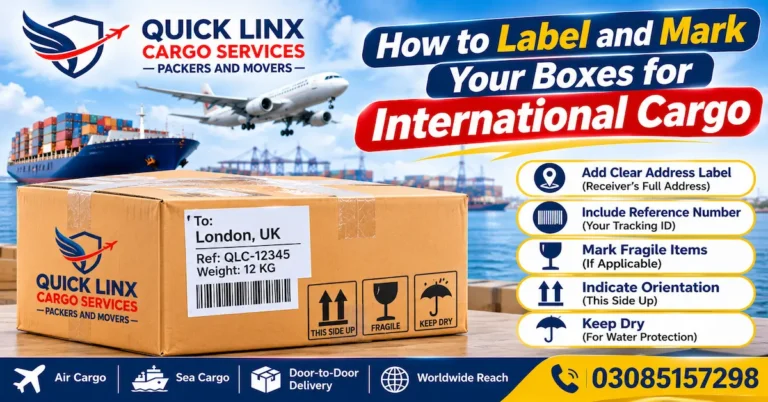
Print the buyer’s address clearly on the outside and place a second copy inside the box. Write “Commercial Samples” on the carton. Add your own name and phone number as the sender. If the buyer gave you a reference or purchase enquiry number, put it on the label too. It helps their receiving team match the parcel quickly.
Express Courier or Air Cargo: Which Is Better for Samples?
For most samples, air is the right choice. Buyers are often comparing several suppliers at once, and slow delivery hurts your chances. Sea cargo is too slow for sample requests, except for very large or heavy sample lots.
For small parcels and documents, express courier cargo is usually the simplest option. For heavier boxes or larger sample lots, air cargo services can work out better on price per kilogram. If you are not sure which fits your parcel, share the weight and box size with a cargo team and compare.
Approximate Air Cargo Rates and Timelines
These are approximate per-kilogram figures for the routes we serve. Final cost depends on actual and volumetric weight, so confirm before booking.
| Destination | Air cargo rate (per KG) | Approximate transit |
| Dubai / UAE | PKR 1,200–1,800 | 3–6 days |
| Qatar | PKR 1,500–2,000 | 4–7 days |
| Saudi Arabia | PKR 1,800–2,200 | 4–7 days |
| UK / Italy / Europe | PKR 2,500–3,500 | 5–8 days |
| USA | PKR 3,000–4,000 | 5–10 days |
| Australia | PKR 3,000–4,000 | 6–10 days |
For a full list of charges, see the pricing page.
Door-to-Door Delivery for Samples
If the buyer wants the sample delivered straight to their office or warehouse, ask for door-to-door cargo services. This saves the buyer from collecting the parcel at a terminal, and it makes your sample feel easier to receive.
Step-by-Step Process to Ship Your Samples Abroad
The process is simple when you follow the same order every time. Prepare the sample, confirm the details with the buyer, pack it, and hand it to the cargo company with your documents. Keep your tracking of the process on paper or in a spreadsheet so you can answer the buyer quickly if they ask.
Here are the steps:
- Confirm the exact sample, quantity, and delivery address with the buyer
- Agree on who pays for shipping and who pays any import charges
- Prepare the sample and keep one identical copy for yourself
- Pack, seal, and label the parcel
- Prepare the invoice and packing list
- Share weight, box size, and destination with the cargo company and get a quote
- Hand over the parcel and documents, then send the buyer the shipping details by email
Customs and Duty at the Destination
Even for samples, the destination country may charge duty or taxes if the goods look commercial. Many identical pieces in one box can make a parcel look like a trade shipment. Keep quantities small and send only what the buyer asked for. Ask the buyer in advance who will pay any import charges, so the parcel is not refused at delivery.
Common Mistakes That Delay Sample Shipments
Most sample delays come from small errors that could have been avoided. A missing phone number, a vague description, or a weak carton can hold up a parcel for days. Check your parcel against this list before handing it over:
- Sending without an invoice or with a vague item description
- Declaring a wrong or unrealistic value
- Using old, soft, or reused cartons
- Forgetting the buyer’s phone number on the label
- Sending restricted items, such as certain liquids or batteries, without checking rules
- Not keeping a matching copy of the sample
- Not asking the buyer about import duty
If you have not booked air cargo before, our guide on how to send air cargo from Islamabad walks through the booking process in detail.