
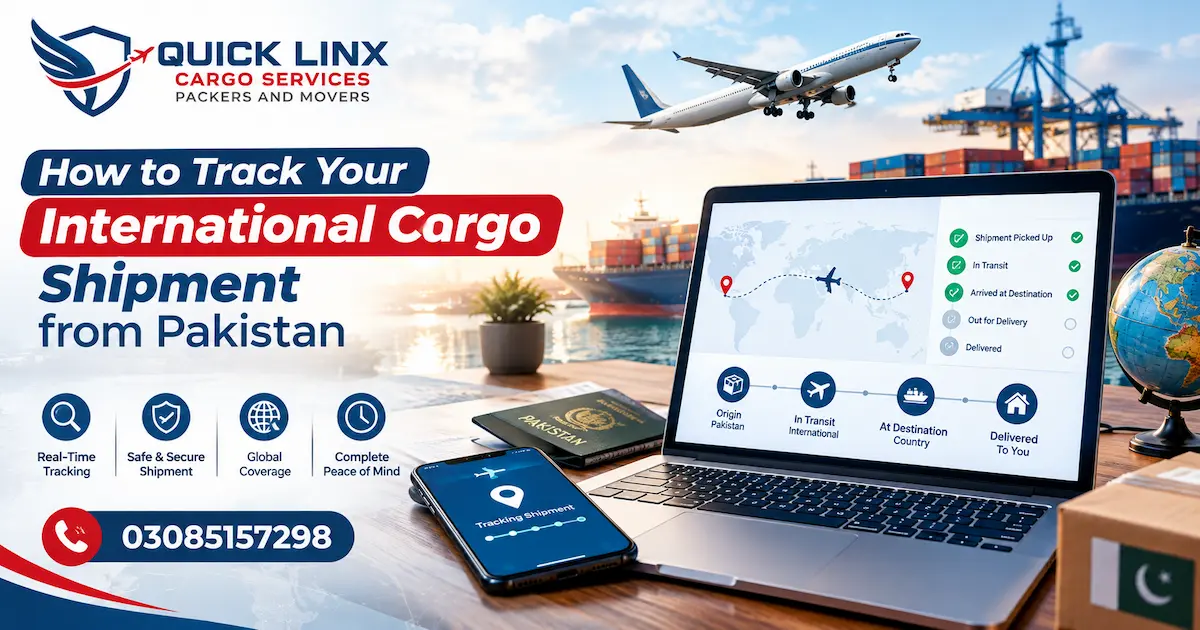
Sending cargo abroad is only half the job. Once your shipment leaves Islamabad or Rawalpindi, you want to know exactly where it is and when it will land. Whether you’re shipping to Dubai, the UK, Saudi Arabia, Qatar, or the USA, tracking your cargo the right way saves you from unnecessary calls, guesswork, and stress. This guide walks you through what you need and how the process actually works, step by step.
Why Tracking Matters for International Cargo
International shipping involves several stages pickup, customs clearance, loading, transit, and final delivery. Each stage can affect your delivery timeline, so knowing where your shipment stands helps you plan on the receiving end, whether that’s arranging pickup, informing a business partner, or simply managing expectations for a family member waiting on a parcel.
Cargo delays are common in international logistics, and most of them happen at customs or during transit hubs, not because something is lost. Tracking helps you tell the difference between a normal delay and an actual problem, so you know when to just wait and when to follow up with your cargo agent.
What You Need Before You Can Track a Shipment
Before you can track anything, you need the right reference number. This number is issued once your cargo is booked and handed over to the airline or shipping line, and it’s the single most important piece of information for tracking your shipment.
- Your tracking number (AWB or BL number)
- The name of the airline or shipping line handling your cargo
- The booking or invoice reference from your cargo agent
Ask your agent to share this number as soon as your shipment is booked, not after it’s already left Pakistan.
Air Waybill (AWB) Number for Air Cargo
For air shipments, your reference is called an Air Waybill (AWB) number. It’s usually an 11-digit number issued by the airline carrying your cargo. This number lets you check your shipment’s status directly on the airline’s cargo tracking page, from departure at the origin airport to arrival at the destination.
Bill of Lading (BL) Number for Sea Cargo
For sea cargo, the equivalent is the Bill of Lading (BL) number, issued by the shipping line once your container or LCL consignment is loaded. Since sea freight moves in stages port loading, vessel transit, and destination port handling the BL number is what ties all these stages together on the carrier’s tracking system.
Step-by-Step: How to Track Your Cargo
Once you have your tracking number, the actual process is straightforward. Here’s how to follow your shipment from pickup in Pakistan to delivery at its destination.
Step 1 Get Your Tracking Number from Your Agent
Your cargo agent issues this number once your shipment is booked and handed over for dispatch. Save it along with your shipment details destination, weight, and expected transit time so you have everything in one place if you need to follow up.
Step 2 Check the Airline or Shipping Line’s Tracking Page
Enter your AWB or BL number on the relevant airline or shipping line’s official tracking page. This shows the current stage of your shipment, such as departed origin, in transit, arrived at destination, or held for customs.
Step 3 Confirm Customs Clearance Status
Customs clearance is often where shipments sit the longest, both when leaving Pakistan and on arrival. If your tracking status shows “customs hold” or similar, this usually means documentation is being verified it’s a normal part of the process, not necessarily a delay caused by the carrier.
Step 4 Contact Your Cargo Agent for Updates
If tracking hasn’t updated in a few days, or the status is unclear, your cargo agent can usually get a faster answer directly from the airline or shipping line’s local office. This is often quicker than trying to interpret tracking codes yourself.
Tracking Air Cargo vs Sea Cargo: What’s Different
Air and sea cargo move differently, so tracking them feels different too. Air shipments update quickly since transit times are short, while sea cargo tracking shows fewer updates over a longer period, since the shipment spends most of its time at sea between ports.
| Factor | Air Cargo | Sea Cargo |
| Reference number | AWB (Air Waybill) | BL (Bill of Lading) |
| Typical transit time | 3–10 days depending on destination | 15–50 days depending on destination |
| Tracking update frequency | Frequent, near daily | Less frequent, mainly at ports |
| Common delay point | Airport customs | Port customs and vessel schedules |
Knowing which type of cargo you sent helps set the right expectations for how often you should expect a tracking update.
Common Problems When Tracking International Shipments
A few issues come up repeatedly when people try to track cargo themselves, especially if this is their first time shipping internationally.
- Tracking number not yet active in the carrier’s system (usually within 24–48 hours of pickup)
- Confusing a courier tracking number with an AWB or BL number
- Assuming a “customs hold” status means something is wrong
- Checking the wrong airline or shipping line’s tracking page
Most of these resolve on their own once the shipment moves to its next stage, but if a status hasn’t changed in several days, it’s worth asking your agent to confirm directly with the carrier.
Tips to Avoid Delays and Tracking Confusion
A little preparation before your shipment leaves Pakistan makes tracking far easier later. These habits also reduce the chances of your cargo getting held up unnecessarily.
- Double-check your paperwork and invoice details before dispatch
- Keep your tracking number and booking reference saved together
- Ask your agent for the expected transit time so you know what’s normal
- Follow up with your agent, not just the carrier’s website, for unclear updates
Getting these basics right at the start avoids most of the back-and-forth later.
H2: Why Work With a Cargo Agent for Tracking Support
Tracking numbers only tell you so much. A cargo agent with years of hands-on experience in international logistics can read between the lines of a tracking update, confirm what a customs status actually means, and follow up with the airline or shipping line’s local office directly when something looks off. This is especially useful for door-to-door cargo services, where your agent is coordinating both the shipping and the final delivery on your behalf.
If you’re planning a shipment and want a team that stays on top of it from pickup to delivery, get in touch for a quote before you book.