
Shipping cargo by air from Pakistan involves more than just packing boxes and booking a flight. Customs officers on both ends check paperwork carefully, and even one missing document can hold your shipment at the airport for days. Whether you’re sending commercial goods or personal items, knowing exactly what paperwork you need saves time, money, and a lot of frustration.
This guide breaks down every document you’re likely to need, when you need it, and why it matters. If you’re working with Air Cargo QLC, our team handles most of this paperwork for you, but it still helps to understand the basics.
Why Proper Documentation Matters for Air Cargo
Pakistan Customs, along with the receiving country’s customs department, relies on your shipping documents to check what’s inside your cargo, confirm its value, and calculate any duties owed. Missing or incorrect paperwork is one of the biggest reasons shipments get delayed or held at the airport.
Good documentation does three things: it speeds up customs clearance, it protects you if something goes wrong with the shipment, and it keeps your cargo compliant with both Pakistani export rules and the import rules of the destination country. This matters whether you’re shipping to Dubai, the UK, Saudi Arabia, Qatar, or the USA. Each country has its own import requirements on top of Pakistan’s standard export documents, so it’s worth checking both sides before you ship.
Essential Documents You Need for Every Air Cargo Shipment
These are the core documents required for almost every air cargo shipment leaving Pakistan, regardless of what you’re sending or where it’s going.
Air Waybill (AWB)
The Air Waybill is the single most important document in air freight. It’s issued by the airline or your freight forwarder and acts as a contract of carriage between you and the carrier. It also serves as a receipt for your goods and a tracking document throughout the journey. Unlike a Bill of Lading used in sea freight, the AWB is not a document of title, but customs and airlines both require it before your cargo can move.
Commercial Invoice
A commercial invoice states the value of your goods, the buyer and seller details, and the terms of sale. Customs authorities on both ends use it to calculate duties and taxes. Make sure the value listed matches your actual transaction; mismatched figures are a common reason shipments get flagged for inspection.
Packing List
The packing list details exactly what’s inside each package, including item descriptions, quantities, weights, and dimensions. It should match the commercial invoice closely. Customs officers often cross-check both documents, so any inconsistency between them can trigger delays or additional questions.
Additional Documents Depending on Your Shipment
Beyond the basics, some shipments need extra paperwork depending on the goods, their value, or the destination country.
Certificate of Origin
This document confirms where your goods were manufactured or produced. It’s often required by the destination country to apply correct import duties, especially if a trade agreement between Pakistan and that country offers reduced tariffs. Chambers of commerce in Pakistan typically issue this certificate.
Import/Export License
Most general cargo doesn’t need a special license. But if you’re shipping regulated goods such as chemicals, pharmaceuticals, or certain electronics, you’ll need an export license or a No Objection Certificate from the relevant government body before the shipment can leave Pakistan.
Insurance Certificate
While not always mandatory, cargo insurance is strongly recommended for valuable shipments. If your goods are lost or damaged in transit, an insurance certificate is what allows you to file a claim. Air Cargo QLC offers insurance as part of our shipping services, so this is worth asking about before you book.
Documents for Restricted or Special Cargo
Some categories of goods need extra paperwork on top of the standard documents. If you’re shipping any of the following, plan ahead, since these approvals can take time:
- Pharmaceuticals and medicines require approval from the Drug Regulatory Authority of Pakistan (DRAP)
- Agricultural products, fruits, or plants need a phytosanitary certificate from the Plant Protection Department
- Perishable goods may require health or quarantine certificates depending on the destination
- High-value electronics or restricted items often need an import permit at the destination country
If you’re not sure whether your shipment falls into a restricted category, it’s best to check with your freight forwarder before booking, rather than finding out at the airport.
Common Documentation Mistakes That Cause Delays
Even experienced shippers run into avoidable problems. Here are the mistakes that most often hold up air cargo shipments from Pakistan:
- Values on the commercial invoice don’t match the packing list
- Vague item descriptions like “samples” or “personal items” instead of specific details
- Missing signatures or stamps on required certificates
- Sending prohibited items without checking the restricted goods list first
- Waiting until the last minute to arrange licenses or permits for regulated goods
Most of these mistakes come down to rushing the paperwork. Preparing your documents a day or two before your shipment is picked up gives you time to fix any errors.
How Air Cargo QLC Helps You Get the Paperwork Right
With over 7 years of experience handling international shipments from Islamabad and Rawalpindi, we know which documents customs officers actually check and which ones commonly cause hold-ups. When you book with us, our team reviews your paperwork before your shipment leaves, so you’re not the one finding out about a missing document at the airport.
We handle documentation support alongside our full range of services, including door-to-door delivery and customs coordination, so you don’t have to manage each step separately. If you’re new to shipping cargo internationally, our team can also walk you through the process from booking to delivery — read our guide on how to send air cargo from Islamabad for a full step-by-step breakdown.
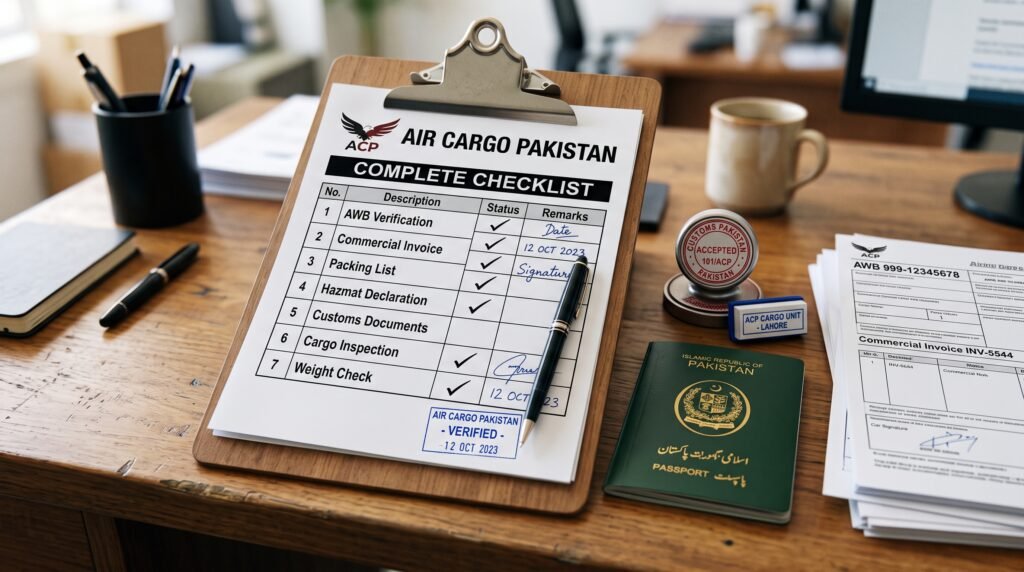
Air Cargo Document Checklist at a Glance
| Document | Required For | Issued By |
| Air Waybill (AWB) | All air cargo shipments | Airline / Freight forwarder |
| Commercial Invoice | All shipments (customs valuation) | Shipper |
| Packing List | All shipments | Shipper |
| Certificate of Origin | Shipments needing origin verification | Chamber of Commerce |
| Import/Export License | Regulated goods only | Relevant government authority |
| Insurance Certificate | Optional, recommended for valuable cargo | Insurance provider |
| Phytosanitary Certificate | Plants, fruits, agricultural goods | Plant Protection Department |
| DRAP Approval | Pharmaceuticals and medicines | Drug Regulatory Authority of Pakistan |
Frequently Asked Questions
Getting your paperwork right the first time is the easiest way to avoid delays at customs. If you’re planning a shipment and want help checking your documents before you book, get in touch with our team we’ll walk you through exactly what you need for your specific cargo and destination.